By: Wycliffe Kadweya, QA Study Nurse
Accurate newborn weight data is the most essential indicator of maternal and child health research. It guides interventions, informs policy, and tracks progress in reducing neonatal morbidity and mortality. Yet, even with the right tools and training, data integrity can be lost at the point of care — a reality we have observed in C-it Du-it study sites within Homa Bay County.
Digital Weighing Scales Distributed, Training Conducted
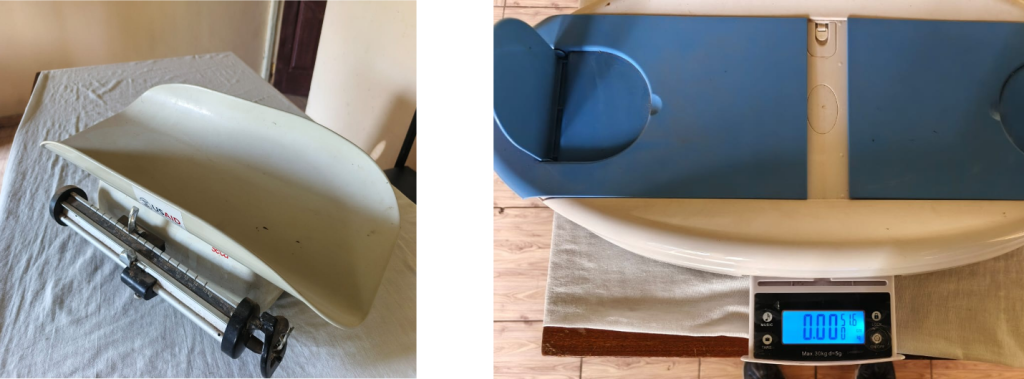
Each of the 18 study facilities received two digital weighing scales — one for the maternity and one for the Maternal and Child Health (MCH) department. All health care staff in these departments were thoroughly trained in their use, maintenance, and proper recording of the weights in facility registers and study instruments.
To ensure reliability and consistency across various locations, the research team regularly calibrated and maintained the electronic scales. The goal was to eliminate estimation errors and ensure reliable data collection, particularly for newborn and infants’ weights, critical indicators for monitoring child health outcomes.
Old Habits Die Hard
Despite these efforts, a number of health workers continue to use the traditional mechanical scales that are less precise and more prone to calibration drift. This has led to the persistent problem of rounding and “data heaping” where baby weights cluster around specific familiar numbers such as 2.5 kg, 3.0 kg, or 3.5 kg.
For infant health research, this seemingly small issue can distort true weight distribution, hide low-birth-weight cases, and weaken the validity of the data we depend on.
Why the Change Hasn’t Stuck
Follow-up quality assurance visits and informal conversations revealed several reasons for the gap between training and practice:
- Comfort with old ways: Several providers trust the mechanical scales they have always used.
- Fear of failure: Some facilities worry about battery issues breakdown during busy clinic days.
- Pressure to work quickly: On busy clinic days, old habits can feel faster, even if they are less accurate.
- Limited supervision: Without regular check-ins, adherence to digital weighing practices can slip.
The Cost of Inaccurate Data
A difference of 0.2 kg may seem small but in research and program it matters. Inaccurate weights can mask cases of low birth weight that require special care and follow-up. Over time, these errors undermine the reliability of our findings and weaken the evidence that shapes maternal and child health decisions.
Helping Good Practices Stick
To bridge this gap between training and practice, we suggest
- Supportive supervision: Include direct observation of weighing practices during monitoring visits, with immediate feedback.
- On-site mentorship: Short, focused sessions to refresh skills and remind staff why precision matters.
- Recognition and accountability: Celebrate facilities that consistently use digital scales correctly during review meetings.
- Ongoing data audits: QA teams can continue checking data clusters and help correct inconsistencies early.
Conclusion
Technology itself cannot ensure quality – people do. The rollout of digital weighing scales at our research sites has been a major step forward, but sustained mentorship, supervision, and accountability remain key.
Accurate data is not just a research requirement but a reflection of the care and attention every baby deserves.
Because quality care begins when we choose precision over habit.