
“There is a myth that community health workers cannot understand Quality Improvement (QI) concepts. We have busted that myth with the Du-it Community–Facility QI Model.”
For a long time, Quality Improvement (QI) was viewed as a technical process meant only for senior health managers and facility professionals. However, through the Du-it Community–Facility QI Model, tested within antenatal and maternal health services under the C-it Du-it project, we have learned that when community health workers (CHWs) are trained, guided, and supported, they not only understand QI — they excel at it.
This is a unique, first-of-its-kind approach that brings communities and facilities together in the same QI team. The model has transformed the way health facilities and communities collaborate to improve maternal and newborn health outcomes.
Data in focus: reviewing key insights to drive quality improvement. Photo Credit Collins Kayubs
A Step-by-Step Learning Approach
A key feature of the Du-it model is its facilitated training process, designed to simplify complex QI concepts into practical, hands-on learning experiences. The training unfolds in three phases:
Phase One: Short, focused training sessions introducing key QI concepts and tools.
Phase Two: Practical sessions, where participants apply what they have learned directly in their work settings to solve real problems.
Phase Three: Experience-sharing sessions, where teams reflect on what worked, what didn’t, and how they can adapt. Each QI cycle concludes with a Learning Event – a “festival of learning” – where community and facility teams showcase their progress, share innovations, and celebrate results.
As LVCT Health, we have started implementing the Du-it model in Kenya since 2016. This iterative process has allowed teams using the Du-it model to continually adapt and expand, applying QI to a variety of maternal and child health interventions. This continuous cycle of learning has kept the model dynamic and responsive.
Who Makes Up the Work Improvement Team
Each Work Improvement Team (WIT) includes:
Community health providers
Community health supervisors
The facility in charge
A community representative
Representative from community administration
A member of a vulnerable group — for instance, an adolescent in the adolescent-friendly service WIT
This inclusive composition guarantees that diverse voices are heard and that solutions are guided by authentic community experiences. Through this structure, teams have learned to collect, understand, and analyze their own data — identifying issues affecting antenatal care, setting priorities, and developing interventions to address them.
One innovative solution that emerged in Homabay is the locator form. Initially, one facility struggled to match community health providers with the specific villages they served due to local naming differences. The locator form simplified this process by linking each provider to their community, improving home visits, follow-ups, and referrals — a simple but powerful innovation born from local insight.
The Du-it model is implemented and tested under the C-it Du-it study, funded by NIHR, to strengthen community-facility collaboration in improving antenatal care quality in Homa Bay County.
Data That Drives Action
By linking community-level data (eCHIS) with facility-level data (EMR), the Du-it model provides a complete picture of a mother’s journey — from identification in the community to care at the facility. This linkage enhances follow-up, reduces missed visits, and ensures continuity of care.
A recent study at a Homa Bay health facility revealed that 78.6% of ANC clients had missed at least one appointment, citing long distances and waiting times as the main barriers. Findings like these highlights why community–facility collaboration and data integration are essential to improve service access and quality.
Lessons for Counties and Sub-Counties
From the Du-it model, several key lessons stand out:
Empower CHWs as part of QI teams — they are closest to the community and vital for identifying early challenges.
Strengthen data integration between eCHIS and EMR systems for real-time decision-making.
Encourage joint planning and reflection sessions where facility and community teams co-design solutions.
Allocate county resources to sustain community–facility QI structures. Quality improvement should be institutionalized, not treated as a one-time project.
When communities and facilities work together, every mother and baby benefits. The Du-it model proves that QI is not about complicated tools — it’s about people coming together, building trust, learning continuously, and using data to drive action.
A Shared Responsibility
County and national policymakers, together with funders, have a vital role to play by embedding community-facility QI structures within routine maternal health systems, investing in adolescent-friendly antenatal care, and ensuring that SHA resources reach the girls and mothers who need them most.
Together, we can bridge the gap — one mother, one community, and one facility at a time.
Every conversation, every home visit, every referral is a chance to change the story of pregnancy care. When community health promoters and facility health staff work hand in hand, every contact truly counts.
Photo Credit: LVCT Health: Ms. Florence Helidah Achieng, a CHP, receiving an award for her outstanding contribution to Maternal Health during the 2nd C-it- DU-it Learning Event held in Homabay on 02 October 2025.
Introduction
Within the vibrant communities of Homa Bay County, a new approach is transforming maternal health care. Community Health Promoters (CHPs) are leading a quiet revolution, ensuring every encounter with health services is valuable and worthwhile.
Having worked with the C-IT-DU-IT initiative, I have witnessed firsthand how CHPs are transforming maternal and child health in Homa Bay by successfully collaborating, adapting innovative approaches and, most of all, with relentless dedication.
Through collaboration with CHPs, Community Health Assistants (CHAs) who supervise CHPs and facility staff, pregnant women are reached and served in ways previously unimagined. “When CHPs, CHAs and facility teams unite, it builds trust, strengthens services and saves lives,” Nicholas Osoo, CHA.
This spirit of collaboration has reshaped how communities engage with maternal care in Homa Bay County.
Background
Maternal and child health challenges in Homa Bay County mirror those seen across and underserved regions globally, especially in Sub-Saharan Africa: limited access to health facilities, cultural barriers, and shortage of skilled health care workers. Overcoming them has meant finding strength within the community itself. CHPs have stepped forward as changemakers by linking mothers to clinics, sharing vital health knowledge, and proving that local leadership can drive lasting impact.
The Role of Community Health Promoters
CHPs have gone beyond the traditional health education roles. They are change catalysts, advocates for mothers, and community trusted link people. Through their actions, pregnant women are not only made aware of antenatal care (ANC) but are also enabled to access timely services, especially in hard-to-reach communities.
During a just concluded C-it-DU-it Learning event, it was evident that facilities using this collaborative strategy have seen major improvements: more women are completing eight ANC contacts as indicated, and more are starting ANC earlier than 16 weeks of pregnancy.
Pain Points in Maternal and Child Health
Despite dedicated health workers, there are several areas for improvement in Homa Bay County:
Inaccessibility of health facilities in hard-to-reach areas.
Personal or cultural barriers to attending ANC on time.
Few skilled health care providers manage maternal complications.
Addressing these challenges highlights the value of CHPs in extending the reach of the health system by providing proactive, personalized support that connects underserved communities to essential maternal health services.
Stories of Impact
Consider the story of Ms. Jane Onyach, a CHP with Nyagoro Health Centre. She encountered a pregnant woman who had not attended any ANC sessions because she suffered from a mental health problem. Jane immediately informed the facility Maternal Child Health nurse, who contacted the facility in-charge. Together, they visited the woman at home, provided mental health support, and ensured she received the care she needed. The result? A healthy pregnancy and skilled delivery, which brought a healthy baby into the world.
Equally impressive is the story of Mrs. Jane Auma Sunga, another committed CHP. She Identified a pregnant woman whose relatives were reluctant to support her ANC visits on religious grounds. This left the woman uninsured and unbale to have ANC tests done. In a subsequent follow-up, Mrs. Sunga observed that the woman showed signs of Anaemia: she looked pale, could not walk unaided and had low blood pressure. Despite constant referrals, the woman did not go to the hospital. Realizing the urgency of the matter, Mrs. Sunga informed the CHA of the case. Together they conducted a home visit and helped the family realize how grievous the situation had become. Eventually, the family mobilized some money, and the woman was taken to the hospital for proper care.
“In our community, we rise together: every visit, every dialogue, every act of service moves it forward,” Mrs. Jane Auma Sunga, CHP.
Another CHP whose exemplary work was acknowledged during the C-it DU-it Learning Event is Ms. Florence Helidah Achieng. Within seven months she identified and referred 22 pregnant women early in their pregnancy. Her average household visitation stood at 95% and 9 of the women she identified attained the recommended 8 ANC contacts within six months. This illustrates how consistent community follow-up, early detection and strong linkages with facilities are beneficial for mothers and their babies.
These examples reflect how CHPs and facility teams are working hand in hand alongside each other. Beyond addressing individual cases, CHPs also facilitate community outreaches, coordinate vaccine and nutritional access, and serve as vital link between the health system and households.
Takeaways
The success of Homa Bay County points to some important lessons:
Community engagement is central: Local wisdom ensures health interventions are relevant and effective.
Collaboration works: Coordination between CHPs, CHAs, and facility staff results in improved maternal health outcomes.
Every interaction counts: Regular follow-ups and home visits can save lives and result in healthier pregnancies.
Final Thoughts
In Homa Bay County, Community Health Promoters are not only health workers, but also agents of change. With dedication, innovation, and collaboration, they are showing that community-based health care can transform results for mothers and children. Every contact is an opportunity to make a meaningful difference.
Get Involved
Inspired by these initiatives? Join the movement. Empower Community Health Promoters. Whether through donations, volunteering, or assisting with awareness, your support makes every contact count toward a healthier future.
Photo Credit : LVCT Health: CHPs holding a meeting with partner leaders from LSTM and LVCT Kenya at Randung’ Dispensary
As part of my internship with LVCT, I was invited to attend the 2nd C-it Du-it Learning Event in Homa Bay, Kenya. Although I knew little about community health in sub-Saharan Africa, I was eager to learn. What followed was a thought-provoking and humbling introduction to the realities of healthcare at the community level.
WIT Youth Poster from the 2nd Learning Event / credit J Scheibenreif
From the airport to acronyms: My journey begins
Arriving two and a half hours before the departure of my domestic flight to Kisumu felt completely normal to me – the product of a deeply ingrained German sense of punctuality. The other passengers, however, seemed to operate on a very different clock, strolling in just as boarding began, entirely unbothered.
My “community health” journey had officially begun. After a two-hour drive from Kisumu to Homa Bay, I found myself thrown straight into my first C-it Du-it meeting. Vicki, Linet, Mandela, and Jared were tossing what felt like endless stream of acronyms my way: WIT, CHP, CHA, eCHIS, SHIF, SHA, CRF, C-it, Du-it… all while preparing questions for the upcoming World Café session. I caught myself thinking, “Oh, I really should have read all those papers Vicki sent me.” But armed with only a pen and a notebook, I decided to dive in and learn by doing. Settling in and starting to understand.
There I was, squeezed into a small windowless meeting room, surrounded by boxes, people, and a topic I knew almost nothing about—not quite sure what would come next.
Settling in and starting to understand
The next morning brought a welcome change of scene: a stunning view from my hotel room window. Lake Victoria lay calm and peaceful in the morning light, as if to balance out the previous day’s whirlwind. Preparations started with breakfast around 8:30 a.m.—in Kenya, time is more of a reference point than a strict schedule, and everyone drifts in within a flexible window. It was a gentle reminder that I’d crossed not only borders but also cultures of time.
Vicki found the perfect task for me, one that helped me piece together the “community health” puzzle: printing handouts. The day passed quickly, and it was exciting to see everything coming together.
The moment everything “clicked”
“D-Day” arrived—the first day of the Learning Event. As mentioned, time is understood as a reference point, so participants began arriving from 7:30 am instead of the scheduled 8:00 am, while we were still busy printing and setting up.
As a former project manager for international medical conferences, where timing is everything, I took a deep breath and focused on being useful: preparing name tags, distributing masking tape, and greeting people as they arrived. Through these small tasks, I began to understand that behind all those acronyms were real people, communities full of dedication, passion, and ambitious goals to improve the health of pregnant women and their babies with very limited resources.
As the event went on, my understanding deepened. I learned about the many challenges mothers face in Kenya: missing identity cards, lack of health insurance, financial hardship, limited access to care, stigma, malnutrition, malaria, helminth infections, HIV, and shortages of medicines and testing kits.
From that moment, I felt a deep admiration for the Work Improvement Teams (WIT), Community Health Promoters (CHP), Community Health Assistants (CHA), the C-it researchers, the Du-it mentors, and the entire LVCT Health team, who continue their incredible work despite financial challenges and funding cuts.
What I learned in Homa Bay
For me, these few days were more than just a professional experience; they were a lesson in resilience, empathy, and what it truly means to serve a community. I left Homa Bay not only with new knowledge but with a profound respect for everyone working to strengthen community health systems across Kenya and beyond.
If you want to know more about the C-it Du-it project, please visit: https://cit-duit.org/
Visit of WIT Randung with Vicki Doyle, 3rd person from the right side / credit V Doyel
Authors: Sophie Otieno, Isdorah Akoth, Dr. Lilian Otiso
“No SHA, No Money, No Services.” (Community Health Promoter, Homabay County, Western Kenya)
The Social Health Authority (SHA) overhauled the existing Kenya health insurance and is designed to ensure equitable access to healthcare services for all Kenyans. It promises universal coverage and affordability, including free primary healthcare and programs for vulnerable households, and reduced financial barriers to care. Yet for pregnant and impoverished adolescent girls, these promises remain out of reach.
Why the SHA Leaves Adolescents Behind
According to county-level Demographic and Health Survey data from 2022. Homa Bay County shows that the teenage pregnancy rate among adolescents aged 15-19 is 23% which is significantly higher than the national average of 14.8%. The transition to SHA has exposed faults in a system that is leaving behind this group that is most in need.
Three main barriers keep pregnant adolescents from accessing SHA benefits: documentation requirements, unaffordable premiums, and confusion around the system.
The Documentation Barrier: Adolescents Shut Out
The requirement for an identification document (ID or birth certificate) for SHA registration and healthcare access immediately locks many adolescents out of care, as it overlooks the reality that many lack proper documentation, especially orphans and those from marginalized communities.
An adolescent has come, wants an ANC profile. She is pale. She has no parents. She is an orphan. She has no one to depend on. So, when she comes, she is asked for ID, she is asked for SHA. So, how do we help such? (Health manager)
The consequences are severe. Without SHA registration, these young mothers cannot access essential antenatal care (ANC) services like obtaining an “ANC profile”, which includes critical tests for anemia, infections, and other complications. Some facilities turn them away entirely, or demand out-of-pocket payments they cannot afford.
The Cost Crisis
SHA’s requirement for new registrants to pay a full year of premiums upfront has likely created the most significant barrier to care. Adolescent girls facing poverty and gender inequality simply cannot afford this cost. Even registered dependents in low‑income households are often blocked by delayed or unpaid contributions.
Last month I did not pay for SHA, when I go for my clinic visit they will confirm that I had not made my payments. I will have to complete the others as well, and that is when I can be treated. (Pregnant adolescent)
Not being able to pay SHA premiums or fees for a skilled delivery, the adolescents have little to no choice but to use the services of traditional birth attendants or to give birth at home, unattended. This comes with higher risks, with reported cases of serious complications and even death.
Confusion and Misinformation
The SHA transition has been marred by poor publicity and lack of information in the community leading to misinformation. Conflicting messages between media announcements and the situation on the ground leave adolescents unsure of where to go, what to pay, or what they are entitled to, thus driving many away from care.
The Path Forward
Addressing SHA’s challenges requires acknowledging that the current system is failing to meet the sexual and reproductive health rights of adolescents. Addressing the most immediate shortcomings requires:
Removing documentation barriers for adolescents, allowing guardian support or facility waivers for undocumented youth
Reverting to affordable monthly payments or waiving fees for undocumented pregnant adolescents
Ensuring facilities cannot deny maternal and newborn care regardless of SHA status
Providing proper training and infrastructure support at facility and community levels for effective and consistent SHA implementation
Conducting community sensitization activities about SHA by the government and other stakeholders
In conclusion, SHA’s current iteration has created a two-tiered system where those with documentation and financial resources access improved care, while the most vulnerable are left behind. It must be redesigned with the needs of the poorest and most marginalized at its center—not as an afterthought, but as the primary measure of success.
The teenage mothers of Homa Bay cannot wait. Their health and futures depend on a system that protects them rather than excludes them. Policymakers must act now to ensure no adolescent girl is left behind.
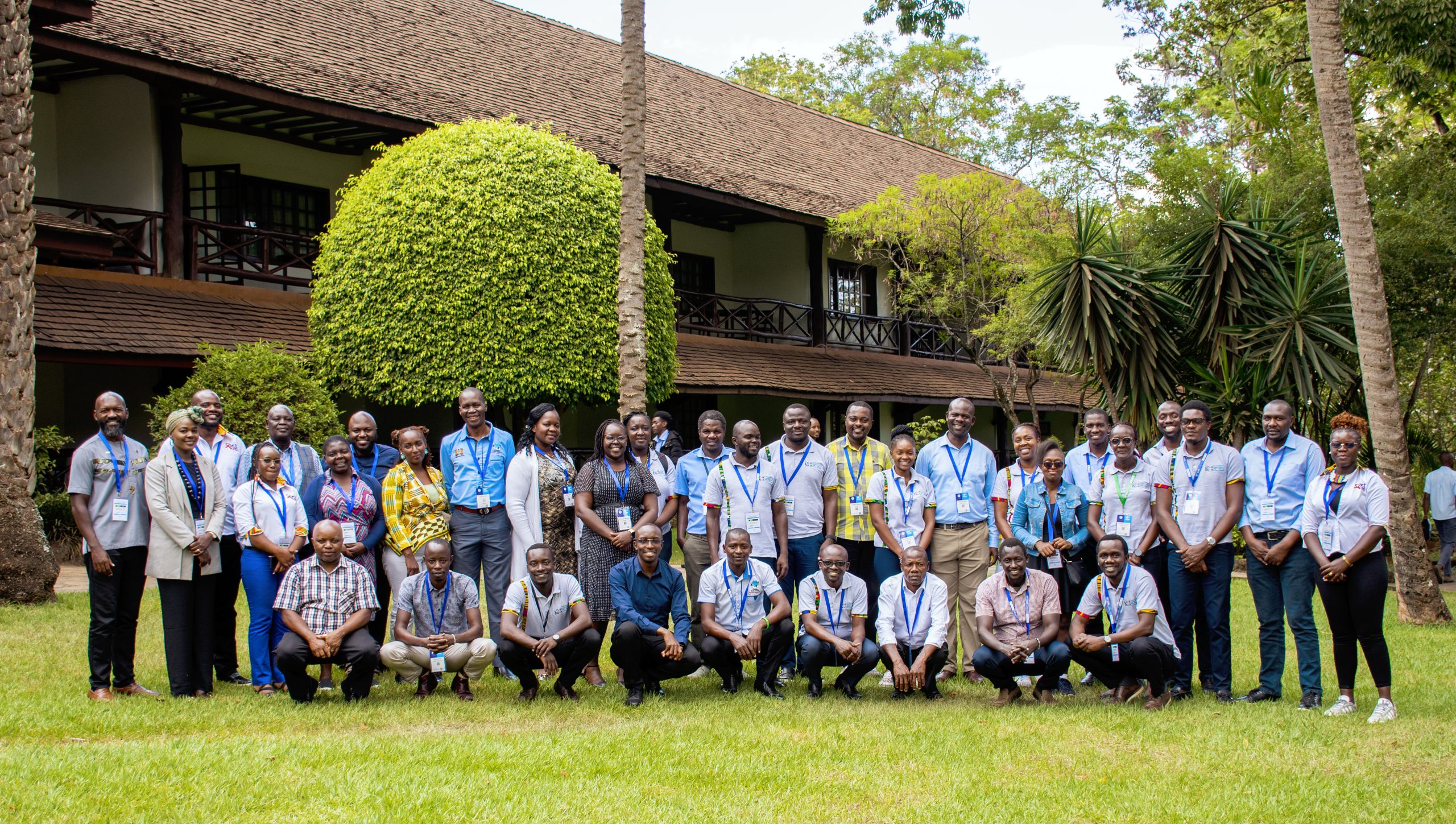
The C-it DU-it and SHINE team pose for a group photo during the conference. (Collins Kayubs- lvcthealth)
Nairobi, Kenya – LVCT Health took centre stage at the 16th KEMRI Annual Scientific and Health (KASH) Conference, held between February 10 and 13, 2026, in Nairobi, to demonstrate how community-led innovation is the key to achieving Universal Health Coverage (UHC). Our team had a significant presence at the conference, showcasing a series of abstracts that highlighted our innovative work in Homa Bay County. Under the conference theme of building a resilient UHC, we shared compelling evidence from the field, where our NIHR C-it DU-it (See-it, Do-it) study is tangibly enhancing the quality of maternal health services.
The C-it DU-it study is a prime example of LVCT Health’s Research-Practice-Policy (Hatua) model, proving that implementation science can solve real-world health system challenges. Our team brought this model to life at KASH through a dedicated symposium where we delved deep into the project’s mechanics, featured a detailed showcase of our innovative tools, and convened a high-level panel discussion to translate our findings into actionable policy recommendations.
Fostering Local Solutions for Local Problems

Work Improvement Team during a routine data review meeting (Collins Kayubs- lvcthealth)
As Kenya transitions to digital health systems like the Kenya Electronic Medical Records (KenyaEMR) and the electronic Community Health Information System (eCHIS), a critical gap has persisted between community-level data and facility-based records. This disconnect often leads to missed antenatal appointments and delayed care. The series of abstracts presented by our team at KASH illustrated how C-it DU-it addresses this not just with a tool, but with a people-centred approach.
At the core of this success is the formation of Work Improvement Teams (WITs). These teams bring together facility health workers and community stakeholders, including the very Community Health Promoters (CHPs) who are the backbone of the health system. By working side-by-side, these WITs are empowered to analyze linked data and, crucially, develop immediate, targeted, and locally relevant solutions to ensure that accountability and action are shared, fostering a true sense of ownership over maternal health outcomes in Homa Bay.
The ‘Silent Supervisor’: Elevating the Role of CHPs
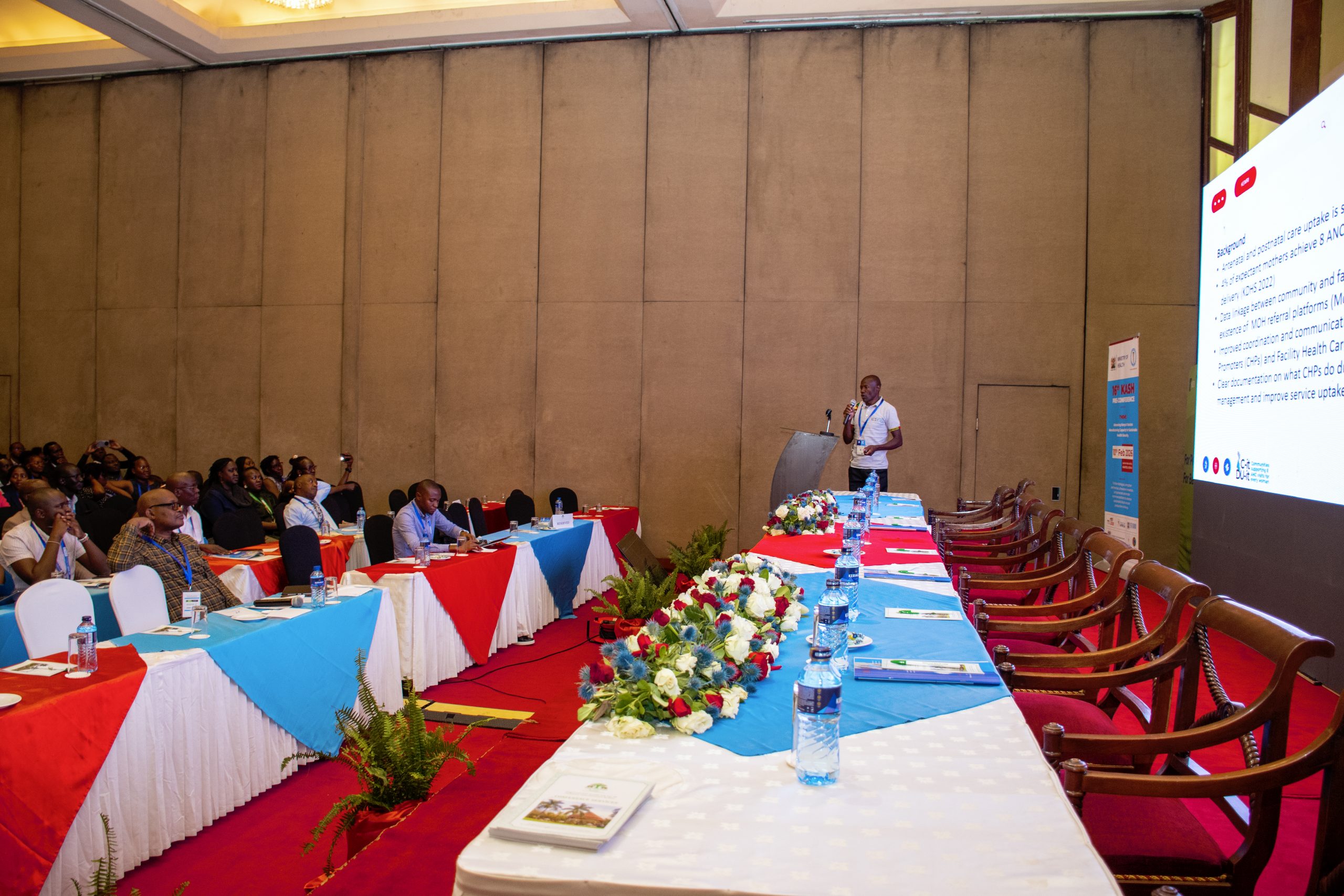
Benson Omollo presenting on CHART at the conference. (Collins Kayubs- lvcthealth)
The practical engine of this enhanced quality of care is the Community Household Antenatal Record Tracker (CHART). During our symposium, our team conducted an in-depth showcase of the CHART tool, demonstrating its intuitive design and profound impact. This simple, paper-based tool is inserted into the mother-child booklet, acting as a tangible link between the home and the clinic. In areas with limited connectivity, CHART ensures that no pregnancy falls through the cracks.
CHART has been embraced by the Community Health Promoters as the “silent supervisor.” For the first time, the critical work of CHPs of capturing pregnancy data, tracking WHO-recommended eight ANC contacts, and flagging missed appointments during household visits is given a formal, visible platform.
It ensures that the rich data gathered at the community level is no longer siloed. By requiring sign-off from both the CHP and the facility health worker, CHART facilitates a clear, two-way communication channel. The facility now has a reliable, real-time window into community activities, validating the CHP’s role and ensuring that vital information leads directly to timely, life-saving follow-ups.
From Research to Policy
The momentum generated by our research and the CHART tool culminated in a dynamic panel discussion on policy during our symposium. Bringing together implementers, researchers, and health managers, the conversation focused on how the successes in Homa Bay can be scaled and institutionalized. The panel underscored that for UHC to be truly resilient, policies must be informed by evidence from the ground, and the voices of CHPs, empowered by tools like CHART, must be central to the dialogue.
Through C-it DU-it and our comprehensive presence at KASH 2026, LVCT Health is proving that resilient UHC starts when communities are equipped not only with tools, but with the authority to act. By enhancing the quality of maternal health services in Homa Bay County and beyond while giving visibility to Community Health Promoters, we are building a health system that truly responds to the needs of the community.
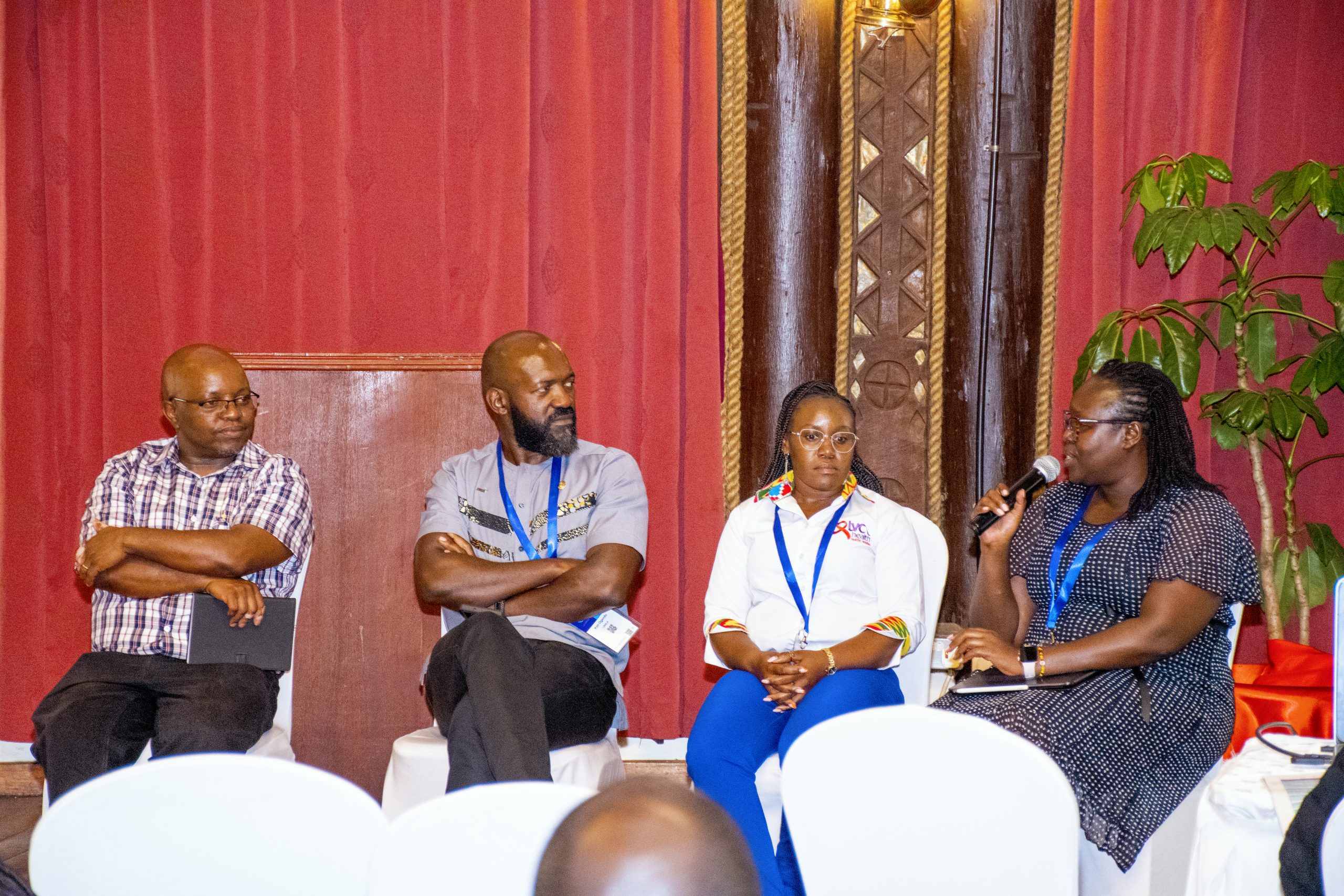
Dr. Hellen Barsosio, Co-Principal Investigator for the C-it DU-it project contributes during a panel discussion at the symposium (Collins Kayubs- lvcthealth)
Get Access to Adult Video Telegram Link for Exclusive Content
If you are looking to find an adult video telegram link, you are stepping into a space where exclusive content is shared directly with users. These links provide access to a variety of adult videos that are often not available on regular platforms. By using an adult video telegram link, you can enjoy a wide range of videos in a private and secure environment. Telegram is known for its privacy features, making it a popular choice for sharing sensitive or exclusive content.
Using an adult video telegram link allows users to join channels or groups where new videos are uploaded regularly. This means you can stay updated with fresh content without the hassle of searching through multiple websites. The convenience of having direct access through Telegram makes it easier to explore different genres and categories of adult videos.
Moreover, the adult video telegram link often leads to communities where members can interact, share recommendations, and discuss their favorite content. This social aspect adds value beyond just watching videos, creating a more engaging experience. Whether you are new to Telegram or have used it before, finding the right adult video telegram link can enhance your viewing options significantly.
How to Join Adult Video Telegram Groups and Channels for Private Access
Joining adult video telegram link groups and channels gives you private access to exclusive content. These groups are part of larger adult video communities where members share and enjoy adult content safely. Many users look for adult group invites to enter these private adult telegram spaces, where adult content groups share new videos and updates regularly. Using adult content sharing links is the easiest way to find and join these communities without hassle.
Finding Reliable Adult Video Telegram Links and Invites
Finding trustworthy adult video telegram link invites is important to ensure you join safe and active groups. Look for adult group invites that come from verified or well-known sources within adult video communities. Avoid random or suspicious links to protect your privacy. Adult content groups often share adult content sharing links in forums or chats dedicated to these topics. Checking the activity level and member count of a group can help you find reliable private adult telegram channels.
Tip: Always verify the source of adult content sharing links before clicking to avoid scams or fake groups.
Steps to Join Private Adult Content Telegram Groups
Obtain a valid adult video telegram link from a trusted source.
Open the Telegram app and paste the link into the search bar or browser.
Click “Join” to become a member of the adult content group or channel.
Follow any group rules or guidelines to maintain access.
Engage with the community if allowed, or simply enjoy the content shared.
Joining these private adult telegram groups is straightforward once you have the correct adult group invites. Many adult video communities require approval, so be patient if your request is pending.
Tips for Safe Access to NSFW Telegram Links
Use a VPN to protect your identity when accessing adult video telegram link groups.
Avoid sharing personal information in adult content groups.
Regularly update your Telegram app to benefit from the latest security features.
Be cautious with adult content sharing links from unknown sources.
Report any suspicious activity within private adult telegram groups to moderators.
Categories and Types of Adult Content Available on Telegram
Telegram hosts a wide variety of spaces where adult content is shared, catering to different tastes and preferences. These spaces include groups and channels that focus on sharing various kinds of mature media. Users can find everything from videos to images and discussions, all organized in ways that make it easy to explore.
Many of these spaces are part of larger adult content communities, where members interact and share new material regularly. The content ranges from casual sharing to more explicit material, depending on the group’s focus. This diversity allows users to find exactly what interests them within the mature content telegram ecosystem.
The sharing of adult media on Telegram is often done through channels and groups that specialize in different types of content. This setup helps keep the content organized and accessible, making it easier for users to find what they want without sifting through unrelated posts.
Adult Video Sharing Groups and Communities
Adult video sharing groups are popular on Telegram because they provide a steady stream of new videos. These groups often have active members who contribute by posting fresh content and discussing the latest releases.
These communities focus on video content, making it simple for users to find clips and full-length videos.
Members can request specific types of videos or share recommendations.
The groups usually have rules to keep the sharing respectful and organized.
Example Features of Adult Video Sharing Groups:
Regular video uploads
User interaction and feedback
Categorized playlists or folders
Mature Content Telegram Channels for Various Interests
Mature content telegram channels cover a broad range of topics and interests beyond just videos. These channels might include photos, stories, or themed content that appeals to different audiences.
Channels often focus on specific niches or fetishes.
They provide curated content, which means the material is selected and organized by the channel owner.
Some channels offer exclusive content that can’t be found elsewhere.
These channels serve as a great way to explore different aspects of adult media sharing in a more controlled and curated environment.
Explicit Telegram Groups for Diverse Adult Media Sharing
Explicit telegram groups are known for sharing a wide variety of adult media, including images, videos, and sometimes live content. These groups tend to be more open about the type of material they share, often including content that is more graphic or intense.
They attract users looking for a broad selection of explicit content.
These groups usually have strict rules about privacy and sharing to protect members.
The diversity of content means users can find almost any type of adult media they are interested in.
Common Characteristics of Explicit Telegram Groups:
Main Features and Highlights of Adult Content Telegram Channels
Adult content telegram channels offer a unique way for users to enjoy and explore mature media. These channels provide easy adult content access, allowing members to view a variety of videos and images in one place. The channels are designed to support adult content sharing in a secure and organized manner, making it simple for users to find what they want without hassle.
One key feature is the variety of content available. From adult video channels that focus on streaming videos to groups that share different types of adult media telegram content, users can find many options tailored to their interests. The channels often update regularly, ensuring fresh material is always available.
Another highlight is the convenience of using Telegram for adult content. The platform supports large groups and channels, making it easy to join and participate in communities that share similar preferences. This setup encourages interaction and sharing while maintaining privacy and control over the content.
Benefits of Using Telegram for Adult Content Sharing
Telegram is popular for adult content sharing because it offers several advantages:
Privacy: Telegram’s encryption helps keep user activity confidential.
Ease of Use: Joining adult content telegram channels is simple with direct links.
Variety: Users can access many types of adult media telegram content in one place.
Community: Channels and groups foster interaction and sharing among members.
Regular Updates: Content is frequently refreshed, keeping the experience engaging.
List of Telegram Benefits for Adult Content Sharing:
Secure messaging and file sharing
Large file size support for videos
Ability to create private or public channels
Fast content delivery and notifications
Privacy and Security in Adult Media Telegram Groups
Privacy is a major concern when accessing adult media telegram groups. Telegram provides several features to protect users:
End-to-End Encryption: Keeps messages and shared content secure.
Anonymity: Users can join channels without revealing personal information.
Control: Admins can manage who joins and what content is shared.
Reporting Tools: Users can report inappropriate or suspicious activity.
Security Tips for Users:
Use strong passwords and two-factor authentication.
Avoid sharing personal details in groups.
Join channels from trusted sources only.
Regularly update the Telegram app for security patches.
These measures help ensure that adult content access remains safe and private for all members.
How Adult Video Access Links Enhance Content Discovery
Adult video access links play an important role in finding new and exclusive content on Telegram. These links provide direct entry points to specific adult video channels or groups, making it easier to discover fresh material without searching extensively.
Quick Access: Links lead straight to the desired content.
Exclusive Content: Some links grant entry to private or invite-only channels.
Organized Sharing: Channels often categorize videos for easy browsing.
Community Growth: Sharing links helps expand adult content telegram channels and their audiences.
Ways Access Links Improve Discovery:
Save time by avoiding random searches
Connect with niche or specialized content groups
Enable sharing of new videos among friends or communities
Keep users updated with the latest uploads through notifications
Using adult video access links is a convenient method to explore the wide range of adult media available on Telegram.
FAQ About Adult Video Telegram Links and Groups
Many people have questions about how adult content telegram groups work and how to use them safely. This FAQ will help explain common concerns about adult video access, adult group invites, and adult content sharing on Telegram. Understanding these basics can make your experience better and safer when joining adult content communities.
What Are Adult Video Telegram Links?
Adult video telegram links are special URLs that let you join groups or channels on Telegram where adult videos and other mature content are shared. These links give you direct access to private or public spaces where members can watch and download videos.
They connect users to adult content communities.
Often used for easy adult video access without searching.
Help people find adult group invites quickly.
Example:
If you get an adult video telegram link, clicking it will open Telegram and show you the group or channel ready to join.
Are Adult Content Telegram Channels Safe to Join?
Safety depends on the source of the adult group invites and how you use the groups. Some channels are well-managed with clear rules, while others might share risky or illegal content.
Always check if the group is active and has good reviews.
Avoid sharing personal info in adult content communities.
Use privacy tools like VPNs when accessing adult content telegram groups.
Safety Tips:
Join groups from trusted sources.
Don’t click on suspicious adult content sharing links.
Report any harmful behavior to Telegram moderators.
How Can I Find Legitimate Adult Group Invites on Telegram?
Finding real adult group invites can be tricky because many links are fake or unsafe. Here are some ways to find legitimate invites:
Look for recommendations from trusted adult content communities.
Use forums or chats where users share verified adult content sharing links.
Check the group’s member count and activity before joining.
Method
Description
Trusted Forums
Communities where users share safe invites
Verified Telegram Links
Links from well-known adult content telegram channels
User Reviews
Feedback from current members about group safety
Can I Share Adult Content on Telegram Without Risks?
Sharing adult content on Telegram is possible but comes with risks. Telegram allows adult content sharing in private groups, but you must follow rules to avoid problems.
Share only in groups that allow adult content.
Respect privacy and do not share others’ personal info.
Avoid posting illegal or copyrighted material.
Important:
Sharing adult content without permission can lead to bans or legal issues. Always be careful and responsible.
What Types of Adult Media Are Commonly Shared in These Groups?
Adult content communities on Telegram share many kinds of mature media, including:
Videos (clips, full-length)
Photos and images
Stories or text-based content
Live streams or interactive content in some groups
These groups often organize content by type or theme to make it easy for members to find what they want.
Common Media Types:
Adult video access for streaming or download
Photo galleries shared within adult content telegram channels
Themed content for different interests in adult content communities
This research is funded by the NIHR (GH 150178) using UK aid from the UK Government to support global health research. The views expressed in this publication are those of the author(s) and not necessarily those of the NIHR or the UK government.