Written by Linnet- Lela Health Centre
Meet Jennie*: a young widow whose story echoes that of thousands living along the shores of Lake Victoria. These are women balancing survival, motherhood, and danger in ways the world rarely sees. Jeenie’s journey exposes the invisible struggles behind maternal health statistics, reminding us that every number has a name, a face, and a fight behind it.
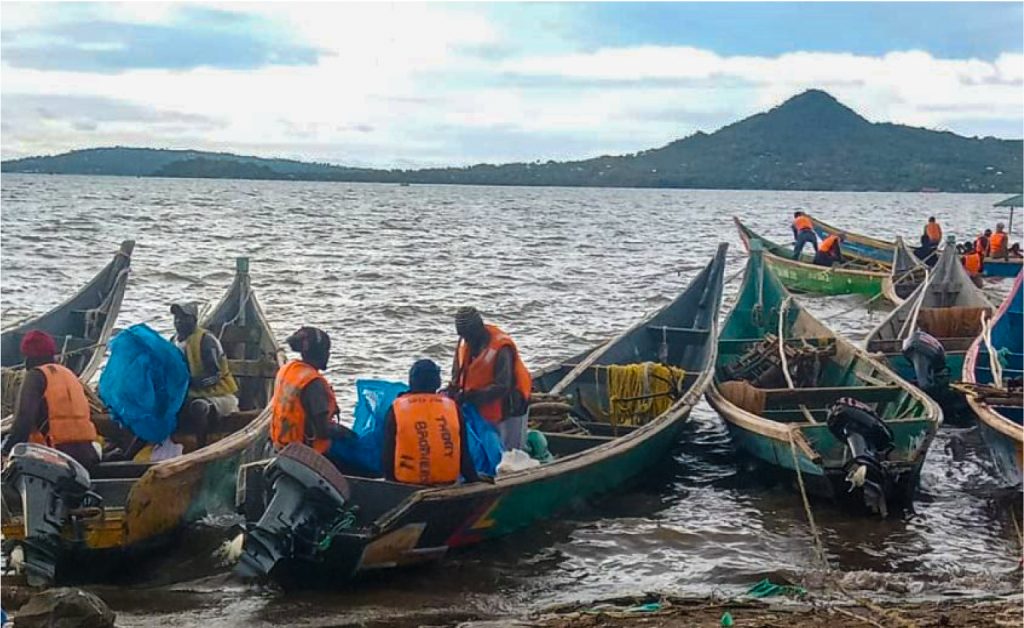
I was left a widow at 32, with five children and a pregnancy…that was my sixth child to be, whom I hoped would bring back lost joy. … Fishing is the main economic activity here, so I joined the fisher-folk at Rambira Beach. I began fishing fingerlings every day, from 6 a.m. to 2 p.m. It is tiresome, especially with this pregnancy, however, I do not have any alternative, I must be strong.
Where Our Paths Crossed
I met Jennie in January 2025 at Lela health facility in Homa Bay County, where I work as a data clerk for the C-IT-DU-IT study, a collaborative initiative by Lvcthealth, KEMRI, LSTM, and the Ministry of Health. The project supports pregnant women and adolescents to access essential antenatal care (ANC) and tracks progress toward the recommended eight ANC contacts.
Jennie was among the few pregnant women who managed to come for care early, at her first trimester. But early attendance did not guarantee access. Without insurance under the Social Health Authority (SHA), she could not afford the required ANC profile tests. Jennie knew about the importance of SHA insurance but survival had other demands: Every shilling went toward feeding her children. Clinic visits became a choice she could not always make.
Work That Takes More Than It Gives
Life on the lake is unforgiving. Jennie spent hours standing in cold water, lifting nets, and working without meals until late at night. Exposure to waterborne diseases, toxic contaminants, physical strain, and unpredictable weather all posed silent threats to her health and her pregnancy.
“Every morning, my work involved physical strain of heavy lifting, prolonged standing and I could miss several meals, I mostly ate at night.” She recounts.
Her absence from follow-up appointments was recorded in the clinic register. Even the Community Health Promoter could not trace her during home visits as she was always out on the lake, trying to keep her family afloat.
A Loss That Ended Her Silence
At 16 weeks, Jennie began to bleed heavily and rushed to a nearby facility outside our C-it Du-it study site. Clinicians confirmed what she feared: she had lost the pregnancy.
This unborn baby was my hope…my last remembrance of my husband,” she said quietly.
Her grief was deep, but heavier still was the realization that the dangers she faced – long hours in the water, physical strain, missed meals, untreated conditions – had taken away something she desperately wanted to protect. And something shifted in her. The quiet suffering she had learned to live with could not continue – not for her, and not for the women around her. If she could not save her own pregnancy, she resolved to speak up so others might be spared her pain.
Jennie began sharing her experience with widows and young mothers in her community, explaining to them the risks hidden beneath the lake’s surface and the warning signs she once ignored, encouraging them to attend clinic visits. Her voice became a source of courage for women who, like her, face the same impossible choices she once did.
The Bigger Picture
Jennie’s journey is not an exception but a reality of countless women along Lake Victoria. Women who rise before dawn to work, who choose between healthcare and feeding their children, who face preventable dangers because the systems meant to protect them fall short.
Her story calls for urgent action:
- Support for widows and vulnerable households at the community level.
- Multiple measures and Ministry of Health action to ensure antenatal care is truly accessible, especially for women who cannot afford insurance or time away from income-generating work.
*Jennie is not her real name.